
Palo Alto, CA · Plumbing Help
Emergency Plumber for Palo Alto Homes: Burst Pipes, Backups and No Hot Water
A warm patch on the floor. A water bill that doubled with nothing running. A kitchen line that backs up every few weeks. Those are three of the most common reasons anyone calls a plumber, and all three start the same way, by finding the problem before anything gets opened up.
Hidden leaks, repeat clogs and dead heaters: spot them early
Most plumbing calls fall into a short list, and knowing which one you are looking at changes what happens next. A leak you cannot see is a detection job before it is a repair job. A drain that keeps coming back is a pipe-wall problem, not a blockage problem. And a water heater that has stopped working in Palo Alto has almost always died of age rather than of scale.
We work call-only, with no forms and no booking widget. You get a plumber on the phone who can tell you whether this needs someone tonight or whether it can wait until a sensible hour, and you get a written price range before any work begins.
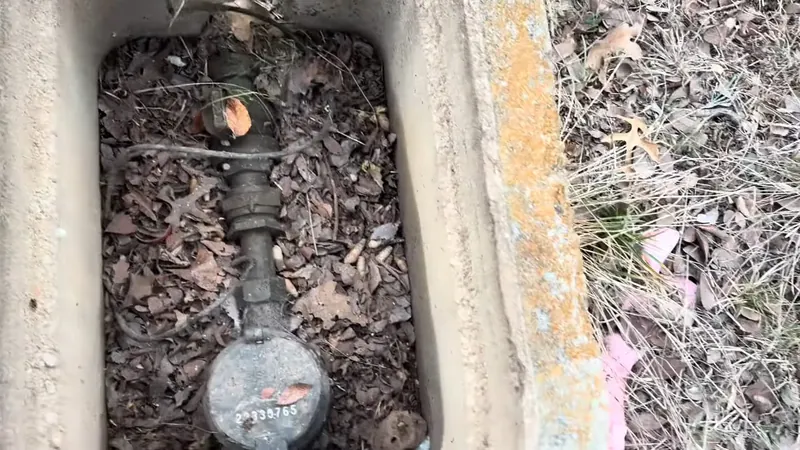
- A leak with no visible source. Starts at the meter. If the dial moves with everything closed, water is escaping somewhere, and acoustic location finds it without exploratory demolition.
- A drain that clogs again within weeks. Snaking punches a hole through the blockage. Jetting scours the wall of the pipe. A camera tells you which one the line actually needs.
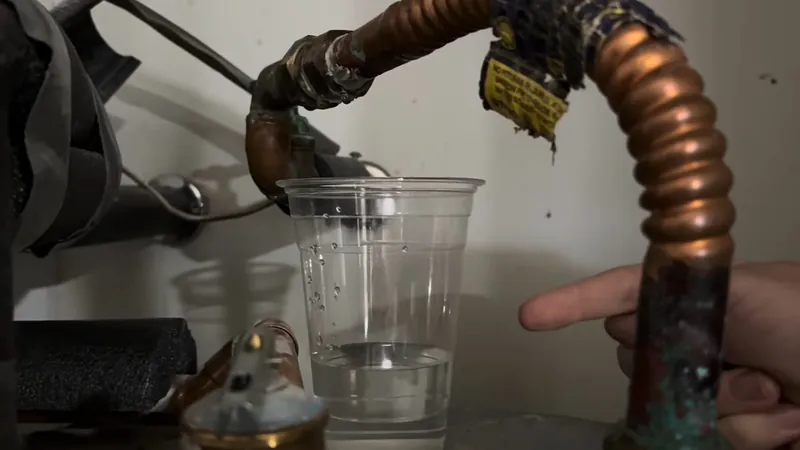
- No hot water, or a tank weeping at its base. A leak from the tank body itself is not repairable. A leak at a fitting usually is.
- Sewage backing up into the house. Stop using fixtures, then call. In Palo Alto there is also a question of whose line it is, which we cover further down this page.
Plumbing services across Palo Alto
Water Heater Repair
No hot water, or a tank weeping at the base. Low-mineral local water means age, not scale, is usually what ended it.
Learn moreDrain Cleaning
A kitchen line that backs up every few weeks usually needs its pipe wall cleaned, not a hole punched through the clog. We clear, then camera.
Learn moreWater Damage Cleanup
Standing water pulled out and the structure dried. We handle extraction and drying, not rebuilding.
Learn moreSewer Line Repair
Palo Alto splits lateral ownership at the first city cleanout. We find out whose line it is before anyone digs.
Learn moreTrenchless Sewer Repair
Cured-in-place lining that spares the driveway and the mature trees, where the camera shows the host pipe can take it.
Learn moreLeak Detection
A water bill that jumped with nothing running is a leak until proven otherwise. Finding it starts at the meter, not the wall.
Learn moreWater Heater Installation
Palo Alto's heat pump replacement mandate is currently suspended, but electric-readiness rules still apply. We explain which.
Learn moreTankless Water Heaters
Sizing, gas and electrical capacity, and the descale interval that low-hardness, high-pH water actually calls for here.
Learn moreHydro Jetting
When the same line clogs back within weeks, jetting scours the wall of the pipe instead of punching a hole through it.
Learn moreSlab Leak Repair
In Eichler-era south Palo Alto a warm floor may be the radiant heating, not a leak. Telling them apart comes first.
Learn moreGarbage Disposal
Jammed, humming, or leaking at the flange. Usually a same-visit repair, sometimes a unit that has simply run its course.
Learn moreFaucet & Sink Repair
Dripping fixtures and shut-off valves that no longer shut off. Usually small jobs, with a written range before work.
Learn moreToilet Repair
A toilet that refills on its own is wasting water continuously. It is usually a flapper, occasionally the valve.
Learn moreBurst Pipe Repair
Water already escaping. Close the main if you can reach it, then call; if you cannot find it, call and we will talk you through it.
Learn moreWhole-House Repiping
When leaks keep turning up in different places, a repipe is worth pricing against the next round of repairs.
Learn moreWater Treatment
Palo Alto water averages about 3.6 grains, at the low end of the hardness scale. The real questions here are chloramine and a pH of 9.3.
Learn moreNot sure which of these you need? Describe what you are seeing and we will tell you.
Call (833) 840-2034Why a warm floor in south Palo Alto is not always a leak
South Palo Alto has a large stock of Eichler homes, and many of them are heated by hot water circulating through tubing buried in the slab. That means a warm patch on the floor is ambiguous here in a way it is not elsewhere. It might be a failing supply line. It might be the heating system doing exactly what it was built to do.
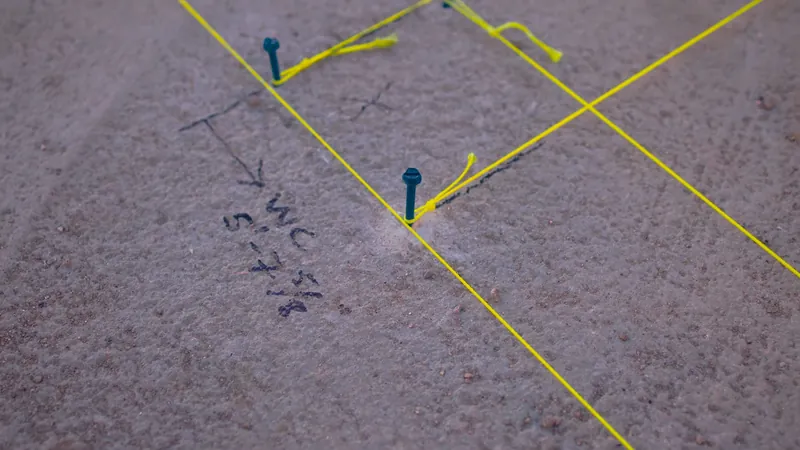
The material matters more than the age. Eichler used copper tubing in 1950, switched to steel in late 1951 during the Korean War copper shortage, and went back to copper in the late 1950s. Copper leaks in these slabs are generally repairable. Steel is the harder case, and a first leak in a steel system can signal the end of that system's useful life rather than a one-off fix.
You can often tell which you have without lifting a finger of flooring. At the manifold, usually near the boiler in a garage, hallway or laundry, copper-colored pipe suggests copper, while green, gray or aluminum-colored pipe suggests steel. A magnet that sticks to the manifold means steel.
Signs worth calling about
These are the symptoms that tend to bring people to the phone, and they apply to both radiant tubing and ordinary supply lines under a slab.
- A hot or warm spot on a floor that is not above the heating loop
- The sound of running water when nothing in the house is on
- Cracking in flooring or along a wall base that was not there last year
- Damp carpet, or mildew smell with no visible source
- White powdery residue along the base of the foundation
Catastrophic failures that force a whole system to be abandoned are rare, so a first leak is a reason to find out what you have, not a reason to panic. What it is not is something to leave alone, because water under a slab does not stay in one place.
Palo Alto's low-mineral SFPUC water and your water heater
If you have been told your fixtures are failing because of hard water, the city's own testing points elsewhere. Palo Alto buys its water from the SFPUC San Francisco Regional Water System, drawn mainly from Hetch Hetchy Reservoir on the Tuolumne River, and in 2025 none of the regional system's groundwater wells were used at all. Sierra snowmelt carries few dissolved minerals.
| Measure | Palo Alto's 2025 figure | What it means at home |
|---|---|---|
| Total hardness | 62 mg/L average, range 8.1 to 112 | Roughly 3.6 grains per gallon, right on the line between soft and moderately hard on the USGS scale. Scale is rarely the main thing ending appliances here |
| pH | 9.3 average, range 8.6 to 9.7 | Alkaline, and treated with pH adjustment for corrosion control before it reaches you |
| Chloramine | 2.78 ppm highest running annual average | This is the taste and smell people ask about, and it is what a carbon filter targets |
| Lead service lines | None in the distribution system | The city's lead service line inventory is complete and found none |
The practical consequence is that a water heater here is usually replaced because it reached the end of its service life, not because sediment destroyed it. It also means a softener is rarely the right purchase in this city, while carbon filtration for chloramine is a reasonable one if the taste bothers you.
There is a second thing worth knowing before you replace a gas water heater. Palo Alto's requirement to swap gas units for heat pumps on alteration projects has been suspended since February 26, 2024, after a federal appeals court ruling on local gas bans. Electric-readiness rules, such as pre-wiring, still apply when you add or replace a gas appliance. Plenty of homeowners believe the opposite, in both directions.
Who owns the sewer lateral at your address
This is the question that decides who pays, and in Palo Alto the answer is written down. Under City of Palo Alto Utilities Rule and Regulation 23, in effect since October 21, 2019, the city owns the lower lateral from the sewer main up to the first city cleanout. You own the upper lateral from that cleanout to your building.
Two situations change that split, and both catch people out. If there is no accessible cleanout on your property, you are responsible for the entire lateral. And where the main runs through a public utility easement rather than the street, the city maintains only the main, so the whole lateral is yours from the connection onward.
- Find out whether you have a cleanout. The standard location is the planting strip. The rule also requires that cleanout boxes be kept visible and accessible, which is easy to lose under landscaping.
- Camera the line before agreeing to any excavation. This is what separates a root intrusion from a collapsed section, and it is what determines whether lining is an option.
- Report the stoppage. The rule requires customers to notify the utility, which then determines responsibility.
- Check the backwater valve question. An approved backwater valve is required under the current California Plumbing Code where fixtures sit at or below ground level.
Lateral repairs and replacements have to meet the city's utility standards and be inspected and approved, so this is not work to hand to someone who would rather not involve the city.
Backing up, or not sure whose line it is? We camera first and dig last.
Call (833) 840-2034Where we work in Palo Alto and East Palo Alto
We stay inside the area we actually cover, which is Palo Alto itself plus East Palo Alto across San Francisquito Creek. That keeps our plumbers working in two neighboring places they know, even though the water and sewer agencies differ on each side of the creek.
Palo Alto neighborhoods
Across the creek
Good to know: the ZIP codes in our coverage area
94301 · 94302 · 94303 · 94304 · 94306 · 94309
This is area information rather than a guarantee for any single address. If your ZIP is on this list, call and we will confirm we can get to you.
Neighboring towns including Menlo Park, Los Altos, Mountain View, Redwood City have their own information pages but sit outside the area we cover, so we would rather say so up front than take the call and pass you along.
Questions worth asking before a plumber arrives
What should I do first during a plumbing emergency in Palo Alto?
Call before you start mopping. We will walk you to your main shut-off while help is on the way, which is usually at the street-side meter box or on the wall where the supply enters the house. If the water is coming from a fixture rather than a pipe, the local stop under that fixture may be enough. Turning the water off early is what keeps a repair from becoming a drying job.
My water bill jumped but I cannot see a leak anywhere. What now?
This is one of the most common leak calls a plumber takes, and it is usually answered at the meter rather than in the wall. With every fixture closed, a meter dial that still creeps is proof that water is moving somewhere. From there we isolate the house side from the service side and locate the leak acoustically before anything gets opened up. Our leak detection page explains the sequence in full.
Is Palo Alto water hard, and do I need a softener?
Probably not. The City of Palo Alto Utilities 2025 water quality report puts average hardness at 62 mg/L as calcium carbonate, a range of 8.1 to 112, which works out to roughly 3.6 grains per gallon. That sits right on the line between soft and moderately hard on the U.S. Geological Survey's scale, low enough that scale is rarely what shortens the life of fixtures here. The water questions that do come up in Palo Alto are the chloramine used for disinfection and an average pH of 9.3, both of which are filtration questions rather than softening ones.
What does plumbing work cost in Palo Alto?
We quote a written range before any work starts, and we do not give an exact figure over the phone, because the price depends on access, pipe material and what the camera or the meter actually shows. As an illustration of the spread, a mechanical drain clearing and a whole-house repipe are different orders of magnitude. Our cost page lists wide market ranges for the most common jobs.
Who are the plumbers who come out?
The plumbers are independent local plumbers, and you should still check for yourself rather than take our word for it. California plumbing contractors hold a license from the Contractors State License Board under classification C-36, and the board publishes a public lookup you can check against the name on the paperwork before work begins. Ask for proof of insurance at the same time. We do not publish a license number on this site, and we would encourage you to be skeptical of any contractor whose number you cannot confirm with the board directly.
Need a plumber in Palo Alto?
Tell us what you are seeing and you will get a straight answer about whether it needs someone now, plus a written range before any work starts. For genuine emergencies, call right away: how soon a plumber can arrive depends on the service, your area and plumber availability.